
Building a ring stack
Three rules for rings that sit together: one metal, one scale, one piece that does the talking.
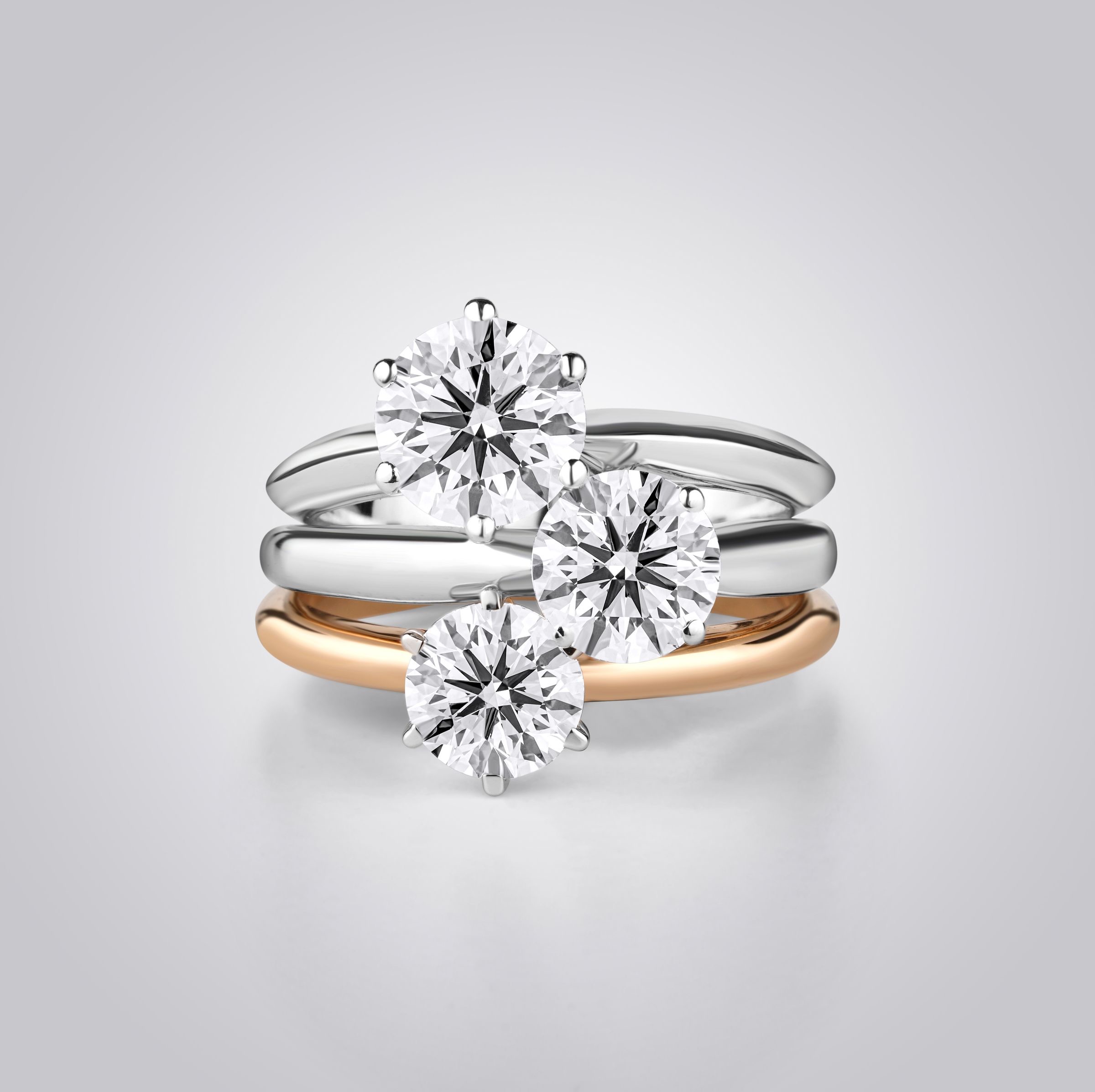
A stack is a set of rings that read as one piece. The ones that work follow a few rules, and the rules are the same whether the stack is three thin bands or an engagement ring with a band on either side.
One metal
Mixing metals can be done, but it is the hardest version. Start with one: the metal of the ring you already wear most. Within one metal, finish can vary. A polished band next to a pavé band next to a plain band gives the stack rhythm without noise.
One scale
Bands in a stack should share a width, or step down from the centre in even steps. A 2 mm band beside a 4 mm band beside a 2 mm band looks planned; a 2 mm band beside a 3.5 mm band looks like a mistake. Stones follow the same logic: if the centre ring carries a one-carat stone, the bands beside it should carry stones no larger than a tenth of a carat each.
Height matters too. A low band sits flush against a solitaire with a high gallery; a high band will knock against it and wear the metal. Curved and notched bands exist for exactly this, and our solitaire listings name the bands cut to fit them.

One voice
Every stack has a piece that does the talking, and the rest listen. If the centre ring is the voice, the bands are plain or pavé. If the stack is all bands, one of them carries a larger stone or a different cut, and the others match each other exactly. Two rings competing is the most common reason a stack looks busy.
Fit the stack as one ring. Three 2 mm bands on one finger wear like a 6 mm band, so go up a half size, and have the set measured together if you can.
Pieces from this story
More from the journal

The everyday diamond
Why the pieces worn most are rarely the biggest, and how to choose one you will not take off.
Read the story
A gift that gets worn
Choosing jewelry for someone else without guessing: four questions, one measurement, and what to do about size.
Read the story